Dumurer Dalna
An indigenous variety of green figs cooked in a ginger–cumin sauce
- Cooking time90 mins
 Calorieskcal

Dumur is "fig" in Bangla. If the word fig brings to your mind the sweet, fleshy fruit from West Asia, this isn't exactly that. Anjeer, or Ficus carica, is a different type of fig.
Dumur, the fig that grows in our part of the world, can be from one of two main species—"kaak dumur" (কাক ডুমুর) or Ficus hispida; or and "joggo dumur" (যজ্ঞ ডুমুর) or Ficus racemosa. Both belong to the same genus Ficus but different species.
In my experience, the smaller "kaak dumur" is the variety that you will find most commonly in the markets of Calcutta, always in its unripe form. That is not to say that "joggo dumur" is never eaten, but it is less common, at least in the city.
These fig trees grow wild all over Bengal and are a treat for the birds when the fruits ripen. The house that I grew up in had a dumur tree by a pond which was always teeming with all kinds of birds.
The unripe/green fruit is astringent, and like all figs it has a gritty, sandy core. The outer layer is fleshy and tastes delicious when cooked. The closest taste I can think of is that of an artichoke. Preparing dumur for cooking involves paring off the outer fleshy layer and discarding the centre of the fruit. My grandmother would always blanch the dumur and discard the water. This helps reduce the astringency.
Historically, the unripe fruit used to be foraged and eaten. Reading this, one might begin to think that this dish is some kind of poor man's food that is not worth the effort. But that would not be entirely correct. Yes, this dish did have its origin in hardship, but it will not be an exaggeration to say that dumur is one of my favourite Bengali vegetables.
It is fleshy, complex and nutritious. We hope you give this recipe a try.
Frequently Asked Questions
Ingredients

Boil dumur
- 300 g dumur (~175 g after cleaning)
- 5 g salt
- ½ tsp turmeric
- 300 ml hot water
Cook dumur
- 35 g mustard oil
- 1 dried red chilli
- 1 bay leaf
- 1 cardamom
- 1 clove
- 1 cinnamon
- ½ tsp cumin seeds
- 150 g potatoes (3-cm cubes)
- 1 tsp cumin powder
- ½ tsp coriander powder
- 1 tsp turmeric
- ½ tsp red chilli powder
- 5 g ginger paste
- 6 g salt
- 10 g sugar
- ¼ tsp atta (rice or wheat flour)
- 2 green chillies
- 120 ml hot water
- 1 tsp ghee
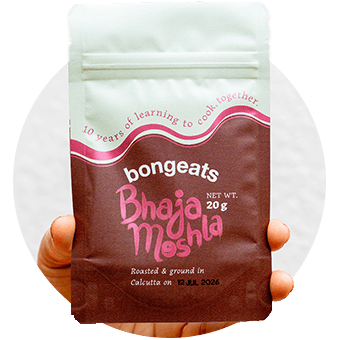
- ¼ tsp Bengali gorom moshla
Method
- Prep the dumur by cutting around the central gritty core and preserving only the fleshy part of the fruit.
- Rinse well under running water to wash away all the tiny seeds clinging to the flesh.
- Set it to boil with salt, turmeric and 300 ml hot water.
- After 5 mins, strain and set aside.
- Cut potatoes in 3-cm cubes. Slit green chillies.
- Heat mustard oil until smoking slightly and pale yellow.
- Stir-fry the dumur until the water dries up, about 4 mins. Set aside.
- Add 15 g more oil to the pan. Temper it with dried red chilli, bay leaf, cardamom, clove, cinnamon, and cumin seeds.
- Add potatoes along with 2 g salt. Cover and fry on low heat for 4 mins.
- Make a slurry of the powdered spices: cumin, coriander, turmeric and red chilli. Add it to the pan.
- Fry the spices until the raw smell dissipates, about 2–3 mins.
- Add ginger paste and fry it off for another couple of minutes.
- Add the remaining salt (4 g), sugar and slit green chillies.
- Also add atta and mix it in. This allows the sauce to coat the vegetables.
- Add 120 ml hot water for the sauce.
- Cover and cook on low heat until the potatoes and dumur are done, about 6–7 mins.
- Finish with ghee and Bengali gorom moshla.