Phakthuk
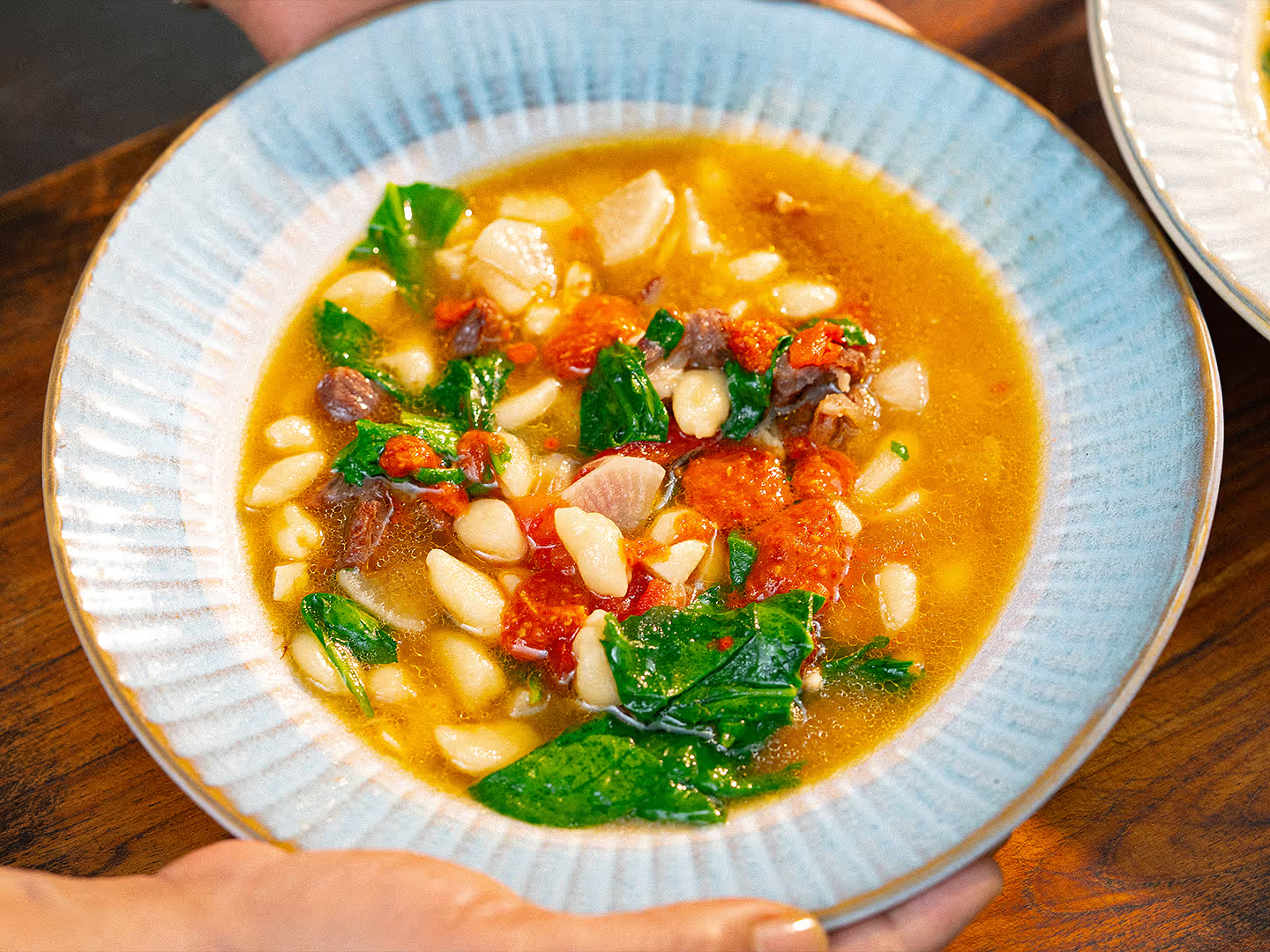
Handrolled cowry shells in a hearty broth
- Cooking time90 mins
 Calories532kcal

Thukpa often mispronounced Thupka, or Thuppa is essentially a Tibetan word for a soupy, broth-y dish. In this episode Doma Wang, Chef and founder of The Blue Poppy restaurants, Calcutta, shows us her recipe of Phak Thuk, which is a type of thukpa made with cowrie-shell shaped noodles. "Then Thuk" on the other hand is made with hand-pulled strips of flat noodles. "Gya Thuk" is thukpa made with egg noodles. "De Thuk" is thukpa made with rice and so on.
The most most important part of a good thukpa, Doma di stresses, is a full-bodied broth. Being a Tibetan dish the Phak-thuk stock would traditionally be made from oxtail, but today Doma di uses goat trotters instead. For a Phak Thuk that serves about 3–4 people she uses 6 trotters plus additional marrow bones to make a broth that is as flavourful as it is viscous.
Next she teaches us how to handroll the tiny, delicate cowrie shell shaped noodles, which are finally cooked in the broth until they are pillowy yet chewy with the groove filled with the flavourful broth.
There really is no word to describe just how unctuous and hearty the Phak Thuk turns out with this recipe. You really go into a trance as you work through the bowl of hot, satisfying soup and noodles. You only emerge from the trance when you find yourself scraping the empty bowl.
This is undoubtedly a dish that requires both skill and patience but the reward is no doubt worth it all.
Frequently Asked Questions
Ingredients

For the broth
- 750 g bones & goat trotters (scrubbed clean)
- 100 g onions (sliced)
- 30 g garlic (roughly chopped)
- 30 g ginger (roughly chopped)
- 7 g salt
- 1.2 L water
For the cowry shells
- 220 g maida (all-purpose flour)
- 125 g water
For the mutton
- 15 g vegetable oil
- 100 g onions (sliced)
- 25 g garlic (roughly chopped)
- 275 g boneless mutton (2-cm cubes)
- 8 g salt
- 200 ml water
For finishing
- 200 g radish (2-cm slices)
- 70 g tomato (quartered)
- ½ tsp white pepper (freshly powdered)
- 10 g dark soy
- 1.2 L broth (from stage 1)
- cowry shells
- 100 g tender spinach
For serving
- Momo sauce or chilli oil (optional)
Method
Step 1—make the broth
- Wash the bones and goat trotters thoroughly, scrubbing them clean.
- Place them in the pressure cooker with onion, ginger, garlic, salt and water.
- Cook them for 45 mins after reaching full pressure.
- Allow the pressure to release naturally before opening the pressure cooker.
- Strain the broth and reserve it for later.
Step 2—make the cowry shells
- While the broth is cooking, make the dough for the cowry shells.
- Mix together maida and water and knead until smooth.
- Allow the dough to rest for at least 30 mins.
- While the dough is resting, you can start prepping for step 3.
- Once rested, divide the dough into 4–5 sections. Work on one section at a time; keep the rest of the dough covered.
- Roll a section of dough into a thin snake.
- Pinch a portion of the dough the size of a pea, and roll it across your palm making a hollow space in the centre.
- Each little dumpling should resemble a tiny cowry shell, with a little cup in the centre to enclose the broth.
- Keep these cowry shells well dusted with flour so that they don't stick to one another.
Step 3—prep the phakthuk
- While the broth is simmering and the dough is resting, start prepping for the phakthuk.
- Dice the boneless mutton into 2-cm cubes.
- Slice the onions, roughly chop the garlic, quarter the tomato, dice radish into 2-cm cubes, and wash, dry and separate the tender leaves of the spinach.
- Also crush some white pepper.
Step 4—finish the phakthuk
- By now you have your broth separated, the cowry shells shaped, and the vegetables and meat prepped.
- Heat oil in a pot.
- Add onions and fry for 1 minute until transluscent.
- Add garlic and fry another minute.
- Add the boneless mutton and salt, and saute for another couple of minutes. Don't let the mutton brown.
- Add hot water, cover the pot and cook until the mutton is tender, about 8–10 mins.
- Once the mutton is cooked, add in the radish and tomatoes, along with white pepper and dark soy.
- Give everything a mix, and add in 1.2 L of the broth. If you have less liquid than this, you can make up the rest with water.
- Simmer for about 8 mins until the radish is partially cooked.
- Add in the cowry shells, dusting off any of the excess flour.
- Simmer with the cowry shells for another 8 mins.
- At the end, turn off the heat and tear in the spinach leaves. Cover and let the spinach wilt in residual heat.
- Serve hot with momo sauce or chilli oil (optional).