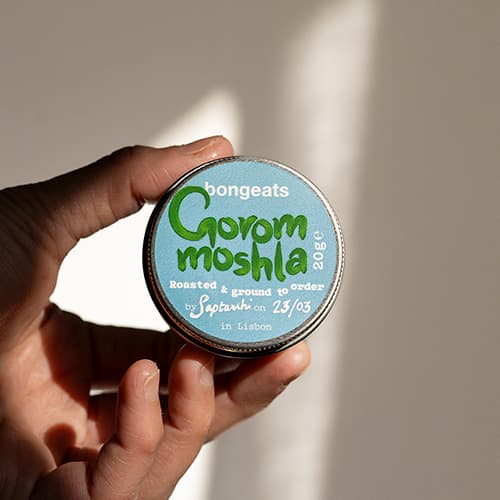
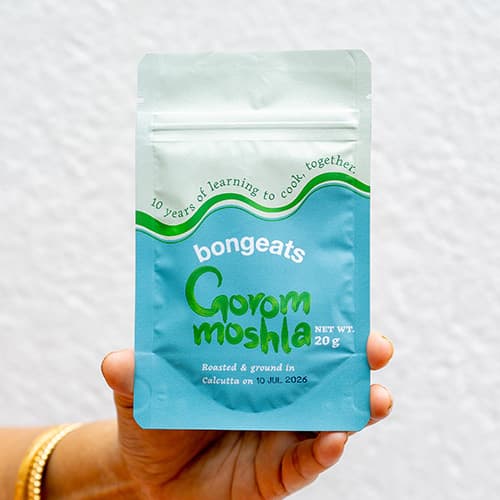
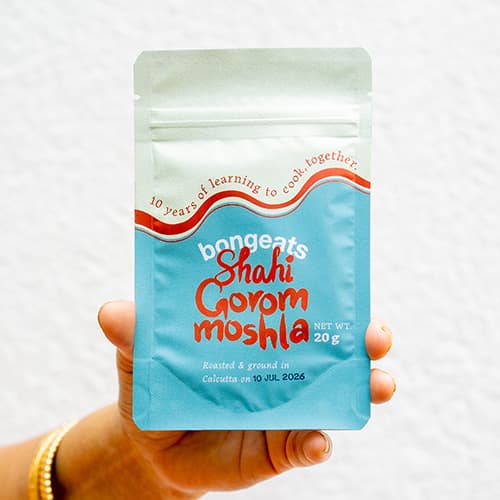
“Shahi” (meaning “royal”) gorom moshla takes the simpler Bengali gorom moshla up a notch with the addition of a few extra-special aromatic spices, all of which together produce a wholesome, well-rounded and harmonious mix of flavours. Shahi gorom moshla is ideal for flavouring kababs, or egg, chicken, mutton, lamb, and beef curries.
Flavour notes
With a bright freshness coming in from the green cardamom and mace; smoky undertones brought in by the black cardamom; peppery notes from the black pepper and dried red chillies; and musky, woodsy flavours from the cinnamon, cloves, bay leaves and nutmeg—this shahi gorom moshla is heady and special!
Usage
Start with these recipes


.avif)

We don't gatekeep recipes
We started Bong Eats in 2016 with only one goal—to inspire more people to cook at home. Our spice mix recipes are available for anyone who wants to make them for personal use.
Get our Shahi Gorom Moshla recipe→

If you can, remember to take some photos! Tag us on Instagram or come hang out with our community of passionate cooks at Bong Eats Adda.
Join the Adda
Frequently Asked Questions
When should I use shahi gorom moshla?
Shahi gorom moshla is a “finishing spice”, but it is also used in the marinades of kababs and in braises. When using it as a finishing spice, sprinkle a small amount (only a pinch or two!) at the end of the cooking, with the heat turned off. This preserves the fresh flavours of the spice, and gives the dish a fragrant lift. If cooking with it, add it to the marinade or to the pan along with the other spices.
When to use Bengali gorom moshla vs “shahi” gorom moshla?
The simple, elegant, three-ingredient Bengali gorom moshla is ideal for vegetable preparations (dalna, ghonto), and certain dals, khichuris, polaos. It is often used as a finishing spice in combination with a teaspoon of ghee. Shahi gorom moshla is best reserved for more robust onion-ginger-garlic based meat or fish recipes, such as korma, kaliya, chaap, etc.
If you are someone who is used to buying "meat masala" or "chicken masala" packets, may we suggest, instead, that you stock a good shahi garam masala in combination with basic spices such as cumin, coriander and turmeric powders? This will give you a lot of control over how different gravies taste. You can vary the proportions among the same set of spices based on taste or your mood, rather than using a single "meat masala" that makes everything taste identical!
How is gorom moshla made?
The whole spices are first gently heated to “awaken” their flavours. This needs to be done with care, and constant monitoring, to ensure that the spices are heated just enough to remove their moisture, but not so much that the spices start “roasting” and caramelising—we want to preserve the fresh vibrancy of the cardamom, cinnamon, cloves, etc., here!
What's so special about your gorom moshla?
Look at the (short list of) ingredients of our Bengali garam masala recipe, and you will see that it is 63% green cardamom, just how my mother likes to make it! That is what gives it the best, brightest, and most no-compromise flavour. A lot of the commercially available garam masala brands hesitate to use green cardamom in large quantities, or indeed in its entirety, pods and seeds. This is because green cardamom is expensive as HELL. (If you go over the ingredients lists of some garam masala packets in the market, you’ll find cardamom shells in use instead of whole cardamom.) Our Bengali garam masala uses good, whole cardamom pods, along with good-quality cinnamon and cloves—which makes it super-potent! You won’t ever need to add it by the spoonsful (in fact, it is strongly advised that you don't!). All you need is a pinch or two to sprinkle at the end of your cooking.
“Gorom moshla”? I thought it was “garam masala”. 🤔
Those familiar with South Asian cooking of any kind have heard of the spice blend known as “garam masala”. But a region as culinarily diverse as this, spanning the countries India, Pakistan, Bangladesh, Nepal, Sri Lanka, etc., cannot possibly have a single "garam masala" concoction used across the length and breadth of its cuisines. What set of spices go into a garam masala depends on the region.
Garam masala, generally speaking, is a type of spice mix composed of a number of individual spices, which, when ground together lend a rich, warming flavour to the dish (the word "gorom"/"garam" literally means “warm”).
This warming effect, of course, is no real quality, but a wholesome, all-enveloping sense of warmth and comfort one experiences after consuming, for example, fresh cinnamon rolls, eggnog with nutmeg, tea with ginger and honey, or a roast with a peppery sauce.
Indeed, all the spices in the examples above—cinnamon, nutmeg, black pepper, ginger—and many more besides, are part of different garam masalas in varying proportions. [Fun fact: all the different meat masalas, chicken masalas, and biryani masalas are types of garam masala; in fact, the now-famous "pumpkin spice" is also a kind of garam masala!]
“Gorom moshla” is the Bengali transliteration of “garam masala”, reflecting how the term is pronounced in the Bengali language.
What does garam masala taste like?
It will depend on the composition, but in general, garam masala tastes neutral and perhaps a bit woody. In some cases, it may taste slightly bitter because the spices are still raw, or peppery if it contains peppercorns or dried chillies.
That said, garam masala is not meant to be eaten raw, like a seasoning. You either cook with it (in a braise, in case of shahi garam masala, for example), or finish your dish with it (cook it in residual heat at the end, in case of Bengali garam masala). This is what fully opens up the entire range of flavours in these spices.
Is there a substitute/alternative for garam masala?
Yes, if you don't have a garam masala mix ready at hand, you can put together a blend semi-quickly based on what whole spices you have in your pantry. For a traditional Bengali garam masala, all you need are cardamom, cinnamon and cloves. For shahi garam masala, in addition to these three you may want to fetch some peppercorns, nutmeg, mace, bay leaves and so on. Based on the region of South Asia your recipe comes from, the garam masalas may call for cumin and coriander too!
Follow the quantities in your recipe, but in a pinch, don't stress if an odd spice or two is missing! You can always stock up later.
How can I make garam masala at home?
Based on the South Asian region you're cooking from, look for a garam masala recipe from that cuisine. We have a couple of garam masala videos on our channel. Once you have the spice combination figured out, the process is straightforward. Toast the spices gently in a pan until they are fragrant (about 4–5 mins). The heat will dehydrate them slightly, making it easy to grind them to a fine powder. Do this in something like a spice or electric coffee grinder. Sift the resultant powder to remove the fibrous bits, and store them in an airtight jar!
How can I get Bong Eats spices in the US?
We are working towards bringing the spices to as many viewers as we can. But we want to expand sensibly and sustainably (we are a two-person team!), maintaining quality, freshness and integrity. Meanwhile, you can easily make all our spices for yourself at home. The recipes are all up on our YouTube channel.
How should I store my spice mixes to keep them fresh?
Store the spices in an airtight jar, away from direct sunlight or humid environments. Refasten the lid/seal after use. To maintain freshness longer, avoid scooping the spices with a wet spoon or damp fingers. If making them at home, grind in small batches that can be used up within 2–3 months, and don't forget to label your containers with the date of preparation!
How can I use the spice mixes in my cooking?
All our spice mixes come with a fleet of recipes that you can use them in, but there is also room for experimentation. To use our spice mixes in your own recipes, start by adding a small amount to your dish and adjust according to your taste. They can be used in marinades, rubs, or added to the pan directly when cooking.
What is the recommended dosage for these spice mixes?
Well, it ranges from ¼ tsp (in case of gorom moshla) to as much as 4 tbsp (in case of nihari)! Please see the usage instructions on our website. If following one of our recipes, it should clearly specify the amount. But when in doubt, err on the side of caution; add a little at first, and adjust as you go. Your mileage with respect to heat level may also vary.
What spice mixes work well for vegetarian dishes?
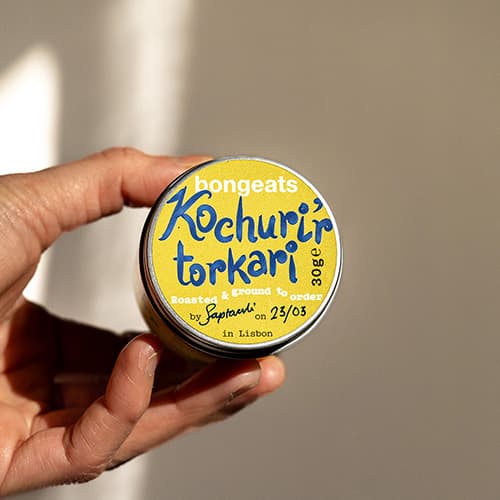
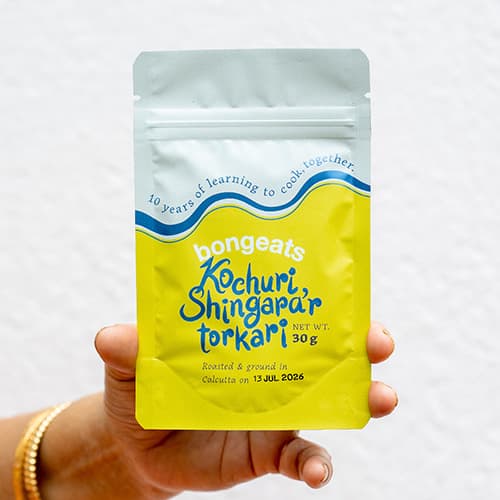
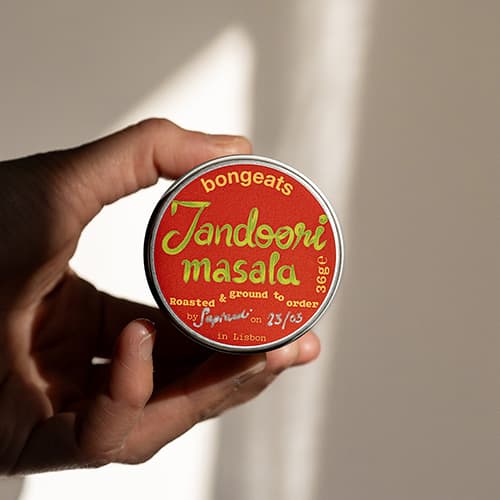
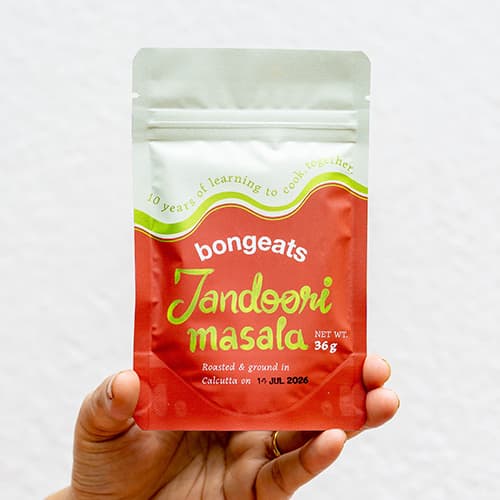
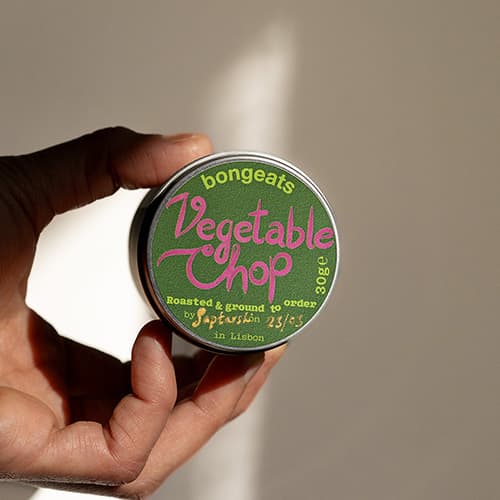
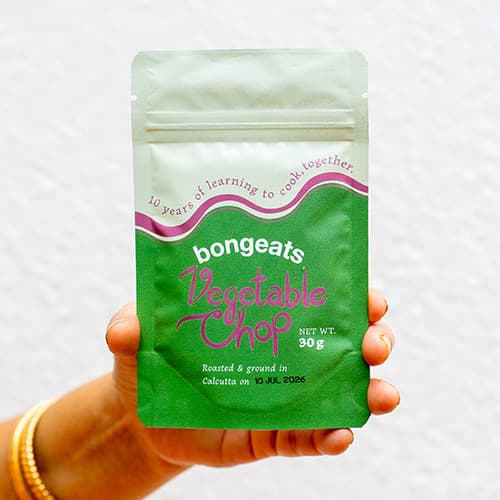
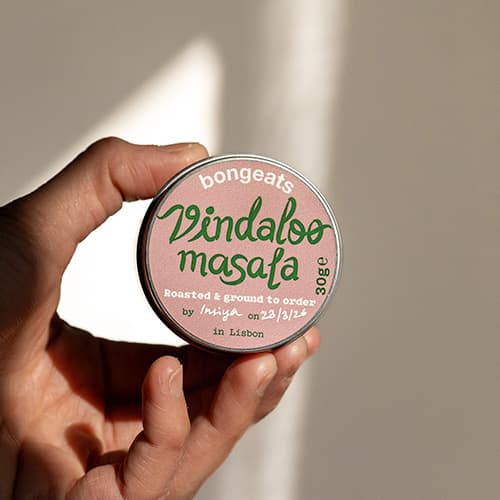
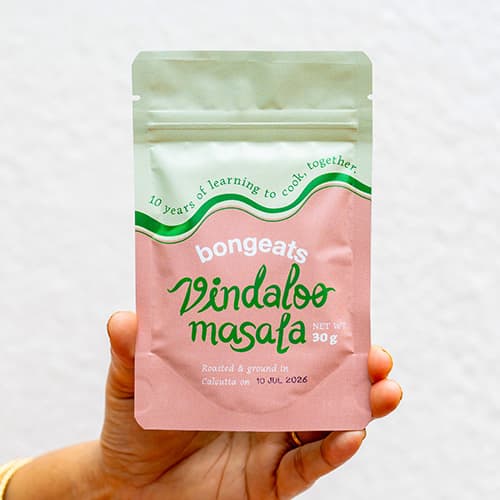
All the spices mixes themselves are fully plant-based. With the exception of the vindaloo and nihari moshlas, all other spices mixes can be used in, or adapted for, vegetarian dishes. Gorom moshla is great for vegetable gravies; bhaja mosha for chaats and raitas; kochuri torkari moshla for curried potatoes and shingara; and vegetable chop moshla for, well, vegetable chops. Our tandoori moshla can be used with paneer, tofu, capsicum, cauliflower, broccoli, etc. Biryani moshla can be used in a beautiful khushka.